GCC regulatory tracker
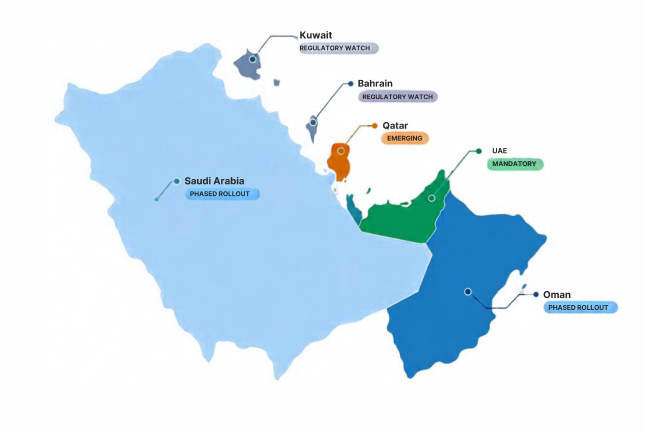
The GCC E-Invoicing map — what is mandatory, What is rolling out, and what is still emerging.
Regional tax digitization is moving in one direction, but not on one timetable. The value of a GCC tracker is precision: distinguishing a live mandate from a pilot, a draft law from an effective requirement, and a future policy signal from an announced date.

Two operational flows
Clearance and reporting, handled as designed flows — not exceptions.
Standard B2B/B2G tax invoices are cleared through Fatoora before delivery to the buyer. Simplified B2C invoices follow the reporting model and are reported within the required window. Businesses that operate both channels need transaction classification, routing and exception logic designed into the integration.
What phase 2 changes
Six markets, six different stages of implementation.
01
UAE
Mandatory phased rollout is fixed. Large entities above AED 50 million: ASP appointment by 30 October 2026; implementation by 1 January 2027. The framework uses PINT-AE XML and a decentralized ASP exchange/reporting model.
02
Saudi Arabia
Phase 2 is live and wave-based. Wave 25: VAT-subject revenue above SAR 187,500 in any of 2022–2025; integration by 1 February 2027.
03
Oman
Fawtara phased onboarding is active from August 2026, with broader 2027 phases and published mandatory dates tied to annual supplies.
04
Qatar
Cabinet approved a draft e-invoicing law and executive regulations in May 2026. Final scope, technical specification and go-live timeline remain pending.
05
Bahrain
No general mandatory go-live date should be marketed unless and until the National Bureau for Revenue publishes it. Treat Bahrain as regulatory-readiness and platform-development monitoring.
06
Kuwait
No broad e-invoicing mandate should be implied today. For regional groups, the practical work is governance and invoice-data readiness rather than country-specific build.
Subscribe to the GCC E-Invoicing regulatory update.
Get country-by-country status changes as they’re published, verified against primary tax-authority sources.