
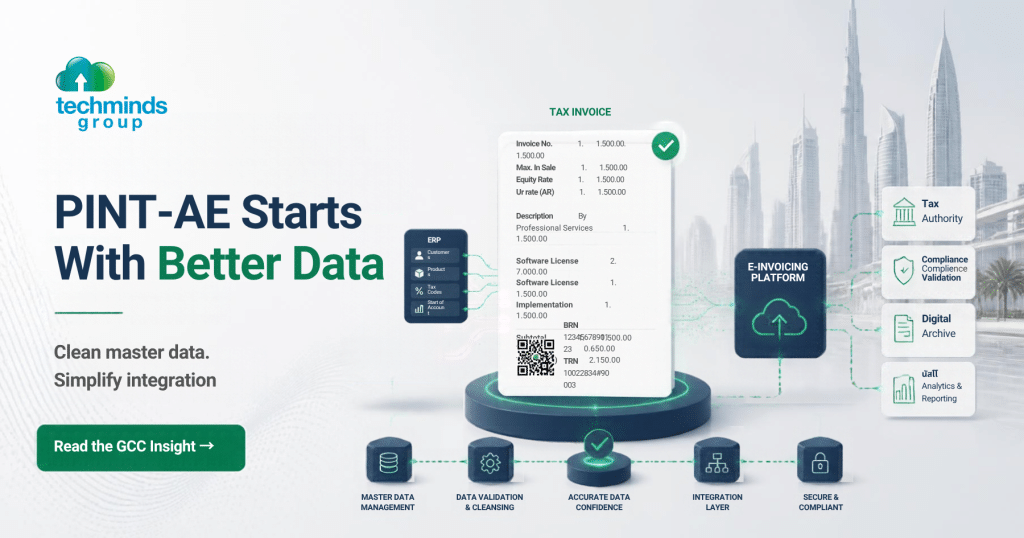
PINT-AE is often discussed as an XML specification. Technically that is true. Operationally, it is better understood as a test of whether the business has structured, dependable invoice data.
An integration layer can transform data only if the source data exists and is governed. Customer identifiers, tax registration details, legal entity information, addresses, invoice and credit-note references, line-level quantities, amounts and tax treatment all need to map consistently from the ERP into the UAE data model.
That is where many projects discover a hidden backlog. A customer VAT number may live in a note field. Different business units may use different tax codes for the same treatment. Credit notes may reference the original transaction manually. Legacy invoice layouts may contain values calculated by custom report logic rather than stored in a structured field.
None of those problems are solved by buying a connector.
A PINT-AE readiness exercise should therefore produce three outputs before development begins: a field-level mapping, a master-data remediation list and an exception catalogue. The exception catalogue is particularly important because go-live success depends on what happens when a transaction cannot be converted or validated cleanly.
The result is a more controlled project. Integration work becomes implementation of an agreed mapping rather than ongoing discovery inside code, and finance knows which data-quality obligations remain with the business.
For organizations close to the UAE deadline, this is the fastest way to separate genuine technical work from data cleanup that can begin immediately.