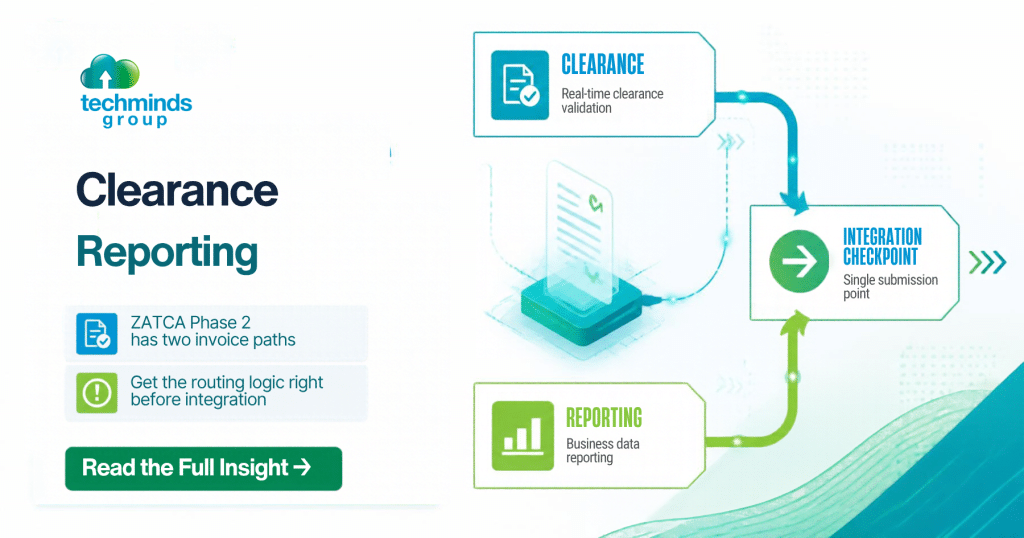
Saudi Phase 2 has two different operating paths that often coexist inside the same company.
Standard tax invoices used in B2B and B2G transactions follow the clearance model. The invoice is submitted through the compliant solution to Fatoora and must complete the required clearance process before it is delivered as the valid invoice to the buyer.
Simplified tax invoices, commonly associated with B2C activity, use the reporting model and are submitted within the defined reporting window. The technical requirements, signing and QR treatment also differ.
For a retailer, food company or distributor that sells through multiple channels, the integration therefore needs routing logic. The decision should be based on the transaction and customer type, not on which screen or channel happened to create the order.
The strongest architecture centralizes that decision. POS, e-commerce and sales-order channels send transactions to a common ERP or transaction layer; classification and compliance processing happen according to consistent rules. That reduces the risk of one channel quietly applying a different tax or invoice-type logic.
Exception handling should be part of the routing design. A standard invoice that fails clearance can directly affect the customer transaction. The business needs visible status, ownership, alerting and a controlled resubmission process rather than a hidden technical queue.
In Saudi e-invoicing, routing is not an edge detail. It is one of the core business rules of the integration.