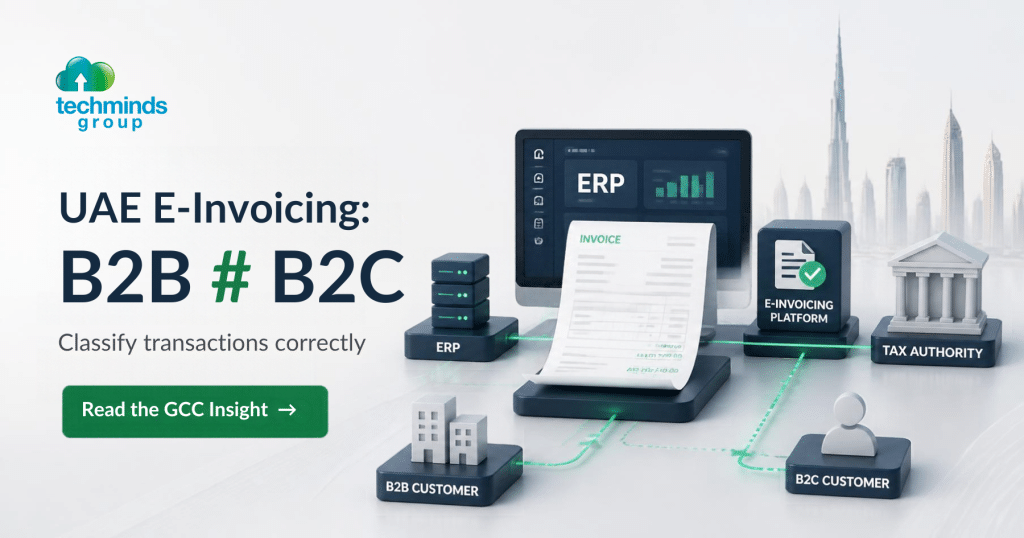
UAE E-Invoicing and B2C Scope: Retailers should be cautious with generic “real-time e-invoicing” messaging in the UAE. Under the current Ministry of Finance guidelines, business-to-business and business-to-government transactions are in scope, while supplies to consumers are outside the electronic invoicing scope.
That does not mean retail businesses can ignore the mandate. Many retailers also sell to corporate customers, franchisees, resellers, marketplace partners or government entities. Those transactions may sit inside the same ERP and order-management environment as consumer sales but require a different downstream process.
The system design therefore needs transaction classification. A B2C sale should not be pushed through a B2B e-invoicing flow simply because it came from the same POS or commerce platform. Conversely, a corporate or government sale should not be treated as a normal consumer receipt if it meets the business-transaction scope.
Returns and credit notes add another layer. The organization needs a controlled way to relate downstream adjustments to the original transaction and maintain the correct structured data for the transactions that are in scope.
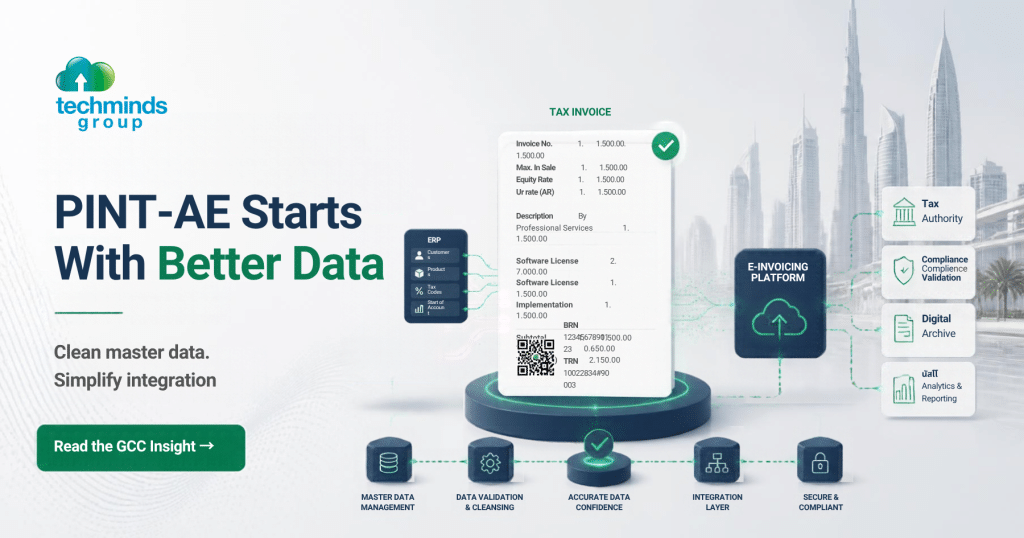
For omni-channel operators, the cleanest design is usually to centralize the decision at the ERP or transaction hub rather than hard-code compliance logic separately in every storefront or POS. The channel submits the transaction; the central system determines the buyer type, tax treatment and compliance path.
That architecture creates a clearer audit trail and avoids a future rewrite if the regulatory scope evolves.
For more details please visit- https://techminds.ae/e-invoicing/uae/